Showing posts with label health care reform. Show all posts

25 September 2009

Communities of Interest

There was a time when the concept of community was strictly geographic - in practical terms, what happened to people who directly affected your chance of survival was what mattered. Trade started to broaden the area, of course, since a trader serves as a broker in cases where geography makes it impractical for interested folks from one community to deal directly with those in another, say to obtain tea from hundreds of miles away while still maintaining your agrarian way of life, working as a blacksmith, etc.

Money, (the use of a system with banks and other financial entities) and technology (such as transportation, and rapid, non-face-to-face communication) have profound ramifications for how we see communities and how they function. It's not necessary, for example, to persuade neighbors to give up their time and labor to help build a home or raise a barn, we negotiate with a banker about the value of such projects and either arrange a mortgage or engage a contractor to attain our goals. We can eat blueberries or other perishable delicacies from halfway around the world; we can see pictures of natural disasters, or wars, as they happen. We are touched by evidence of suffering after a tsunami, or the plight of refugees.

Our sense of community grows - our definition of community is no longer about neighbors in the original sense; our neighbors, the non-family people we are concerned about, include not only those who might dump noxious stuff into our water supply or start a fire that threatens our property, but some living on other continents. We know the plight of workers in India, or China, impacts the standard of living of our relatives and "proximate" neighbors as surely as if they were competing for the same jobs - because in point of fact, they are.

It behooves us, according to most philosophies and religions, to treat our neighbors with the care, interest, and respect we want them to employ when dealing with us.

Yet, in the most technologically advanced nation in the world, the United States of America, we are debating the merit of extending health care coverage to tens of millions of our closest friends and neighbors by making it affordable.

Large capitalist organizations are trying to avoid competing in an open, free market for customers, preferring to pick and choose those they can make the most profits on - while the reality is that everybody does get health care, because if you get sick and you can't afford it the hospitals will admit you to the Emergency Room, but then to insure their own survival they must absorb that effort by raising the prices on their other services. Logic alone obviously dictates that we find a method to spread those costs fairly.

Human compassion argues for doing so, as well.

We're not getting great health care in the United States, we're getting very expensive health care that costs even the wealthy more than it should. Yet, rather than examine the successes in other countries and adopting their best practices, big business interests in this debate are spending millions of dollars every day (collected from health care premiums) to influence the men and women in Congress, who are sorely outnumbered by the lobbyists. It's a travesty - a sham - that makes a mockery of the alleged reliance on free markets to insure efficiency and improvement of goods and services.

The "profit motive" is great. It brings consumers choices for fair trade coffee and tea parties, and "out-of-season" blueberries, and Blackberries™, and a veritable plethora of choices for our transportation, wardrobes, and more. It also brings the cost of MRIs down in Japan, by an astonishing margin compared to what we pay in the USA - why is that?  Because we've let the system of paying for health care mimic a competitive market, while in practice it's not possible for a consumer to make a real, let alone well-informed choice. 
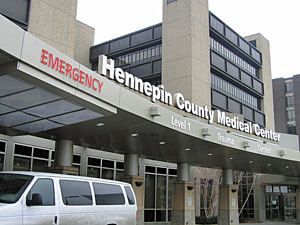
When you're in a serious car accident you don't shop around for the best doctor charging the lowest rates, you trust an ambulance or flight for life chopper (is that socialized health care?) will transport you to the nearest hospital or clinic (are those for-profit entities?) and you agree to pay the price that facility needs to charge you to cover being there, on call, day and night, and cover their overhead, which includes doing all the paperwork for insurance claims and the costs of those who arrive uninsured and broke.

Half of the personal bankruptcies in the USA are triggered by medical expenses.  Bankruptcy isn't some magic wand, though, it means that all the people who were owed money by that person end up getting less than they agreed to originally - sometimes virtually nothing at all - and so THEIR costs of doing business go up much the same way a hospital or clinic has to "absorb" the costs of treating those in the community who cannot afford it.

One way or another, we pay.  One way, we also pay 8-digit salaries and bonuses to CEOs and lobbyists who profit from rising costs that have outstripped inflation for three decades.  Those costs do get spread across the area where the insurers do business, of course.
There's certainly no "perfect" system, and there's big money riding on keeping things "as is,"  but one thing has become obvious to even the most casual observer: there's lots of room for improvement in the current scheme, for finding a fairer way to distribute the costs while controlling the expenses, and the benefit of improvement will flow to you, and me, and our community - no matter if you think of community as the neighborhood, the city, the country, or the planet.
The Congressional Budget Office figures show that tethering a public option to Medicare reimbursement rates would save the government $110 billion! That's even more than the "public option" in which the government has to negotiate rates with doctors and other health care providers. There are LOTS of fiscally conservative ways to improve the bottom line, and places where the profit motive can drive innovation and reduce costs -- but the bottom line is:

Let's get the profit motive out of health care payment.

Digg! Share on Facebook

31 August 2009

Have Town Halls jumped the shark?

The town hall format is attracting a lot of attention, but people obviously come based on partisan goals, emotions run high, and political reporters determine how the story is played in the media.

The Washington Post, for instance, recently ran with
"The DNC kickoff rally in Phoenix attracted about 1,200 reform supporters, but a raucous meeting on the other side of town hosted by Obama's former presidential campaign rival Sen. John McCain (R-Ariz.) attracted hundreds more -- most of whom were loudly opposed to Democratic reform proposals."
This at best inconsistent with the reports from the Associated Press, which indicated McCain faced a hostile town hall crowd in favor of health care reform. Quoting, again,
"After McCain opened it up to questioning, one man angrily pointed at him and asked the senator why he deserves a better health care plan than him."
A more academic setting where the focus is on facts rather than carefully scripted appearances intended to mimic open forums quite probably does more to forward any discussion. Given how adept partisans and pundits of both sides are at dismissing any assertions advanced by their opponents, the chance to have a voice from outside politics, an experienced respected scientific researcher, discussing facts is overdue.

Recognizing that, Dr. Morrison Hodges, Professor Emeritus at the University of Minnesota School of Medicine (and formerly the Director of Cardiology at Hennepin County Medical Center) will describe the forces that shaped the U.S. health care system in a lecture on September 17, 2009. He intends to cover how we arrived at a "market based health care system funded by employers" and how well is it's working in comparison to other countries. Dr. Hodges will explain the history of U.S. health care and how it compares in quality and cost to other functioning systems. Dr. Hodges believes he can outline how the United States can cover everyone with quality health care "without breaking the bank."

The town hall format has done much to illuminate how central the problems with our health care insurance system are in our communities. With one in six citizens uncovered, we've all come to realize that we end up paying for their medical problems anyway, be it through increased premiums, or more subtly when they're forced to file for bankruptcy protection (over half of personal bankruptcy filings in the U.S. are triggered by medical costs.) We've come to resent that money collected to pay health care premiums is spent at a rate of over a million dollars per day just to support lobbyists seeking to continue "business as usual" in D.C., and resent paperwork that drives up costs and bureaucrats that countermand medical decisions without improving outcomes.

It's time to peel back the rhetoric, to get past the sound-bites and the spin-mongering "pundits" -- to stop pretending this is about death panels or a way to cover illegal immigrants, and find a way to preserve our American way of life by insuring that every citizen can afford decent medical care as needed. I applaud Dr. Hodges and those who have made it possible for him to share his knowledge in an academic setting, even if it doesn't make for such dramatic TV coverage.

For more information about the Hodges lecture, see:
http://tinyurl.com/kqvg2c

05 April 2009

Fixing Health Care in the U.S. is not the sole province of Democrats

We expect elected U.S. Senators and Representatives to be our eyes and ears tackling the often thorny issues that are best solved with a national perspective. We don't want state legislatures to spend time re-inventing the wheel on problems confronting us all - what to do on behalf of military veterans, or the mortgage foreclosure crisis, for instance, are challenges for the national government.

It's easy to blame that government for being slow to solve problems: the bodies that craft the laws are deliberative by nature, the departments they oversee are engaged in large undertakings - getting the government to change course or take up new challenges is not trivial. The perception that government isn't quick to solve problems has led to calls for privatization of various functions over the years - retirement accounts, for instance. The far-reaching effects of deregulating our financial institutions and the credit-default swap game have shown us the downside of privatizing.

Partisan posturing placates lobbyists, postpones problem-solving.

Rising cost of health carePutting health care administration into the hands of the insurance industry has arguably had similarly disastrous results. We spend more per capita than other nations, yet their innovations have thus far led only to higher costs that keep rising faster than inflation, faltering quality,and red-tape, with non-medical personnel making decisions about treatments and medications.

We've given the responsibility to big insurance companies because we expected creative, cost-effective solutions that improved the delivery of health care services; that's the strength big business brings to any challenge, right? That's why they earn the big salaries and lavish bonuses. Yet the insurance industry hasn't helped get health care right. The costs are out of control, and with millions of Americans - from children through the elderly - uninsured, their system is plainly failing.
U.S. Senator Max Baucus"In 2009, Congress must take up and act on meaningful health reform legislation that achieves coverage for every American while also addressing the underlying problems in our health system. The urgency of this task has become undeniable."
~Senator Max Baucus, (D-MT)
Chairman, Senate Finance Committee
12 November 2008
When the Senate Finance Committee gets involved it's because the repercussions of the current mess are dangerous for the entire U.S. economy. One innovative solution with bi-partisan Finance Committee support is The GREEN HOUSE® Replication Initiative. The concept of Green House® homes is residences for 6 to 10 elders who require skilled nursing care and want to live a rich life. We're talking about significant departure from traditional skilled nursing homes and assisted living facilities, organized to foster community and services by enhancing both autonomy and support. Creating places for senior citizens to enjoy calling home without the necessary assistance and care becoming the focus of life seems an obvious idea, doesn't it?

Success:
more than bottom line numbers

Insurance actuaries and CEOs know the number of elderly Americans is on the rise, and that their health care is costly - but the solutions haven't been coming from their industry. This particular solution is coming from NCB Capital Impact (the nonprofit affiliate of NCB) and the Robert Wood Johnson Foundation. We need to re-define success. Big business is ignoring the problem, looking instead to their separate bottom lines, while non-profit organizations are bringing real innovation and proactive thinking to bear. We need insurance profiteers out of the health care industry - now.

Note: THE GREEN HOUSE® is a registered trademark. Only projects with an executed sub-license agreement may use the "Green House" term, or a confusingly similar term, in association with a long-term care facility.